Digital wellbeing
Healthy habits for a digital life
Help your family develop balanced, healthy relationships with technology.
Three Pillars of Digital Wellbeing
Screen Time Balance
Healthy boundaries for device usage
- Set device-free zones (bedrooms, dining table)
- Use built-in screen time tools on all devices
- Establish "digital sunset" 1 hour before bed
- Model good screen time habits yourself
Mental Health Online
Protecting emotional wellbeing
- Talk openly about online experiences
- Watch for changes in mood after device use
- Encourage offline hobbies and activities
- Know the signs of cyberbullying
Positive Relationships
Building healthy digital connections
- Discuss what makes a good online friend
- Set boundaries around sharing personal info
- Encourage face-to-face interactions
- Review contact lists together regularly
Age-Appropriate Screen Time
Note: The UK's Royal College of Paediatrics and Child Health (RCPCH) chose not to set official screen time limits for children aged 4+, citing insufficient evidence. The recommendations below are suggested guidelines based on expert consensus, not authoritative limits.
4-7 years
- Suggested limit of 1 hour screen time per day
- Always supervised device use
- Educational content only
- No social media or messaging
8-11 years
- Suggested limit of 2 hours recreational screen time
- Regular check-ins on content
- Supervised social media (if any)
- Gaming with parental controls
12-15 years
- Agree screen time limits together
- Open conversations about online life
- Privacy settings on all accounts
- Encourage critical thinking online
16+ years
- Support self-regulation skills
- Discuss digital footprint importance
- Maintain open communication
- Respect increasing independence
Warning Signs to Watch For
Emotional Signs
- •Irritability when devices are removed
- •Anxious or upset after using social media
- •Withdrawal from family activities
- •Loss of interest in hobbies
Physical Signs
- •Disrupted sleep patterns
- •Headaches or eye strain
- •Reduced physical activity
- •Poor posture or repetitive strain
From the maker of
LootLoop
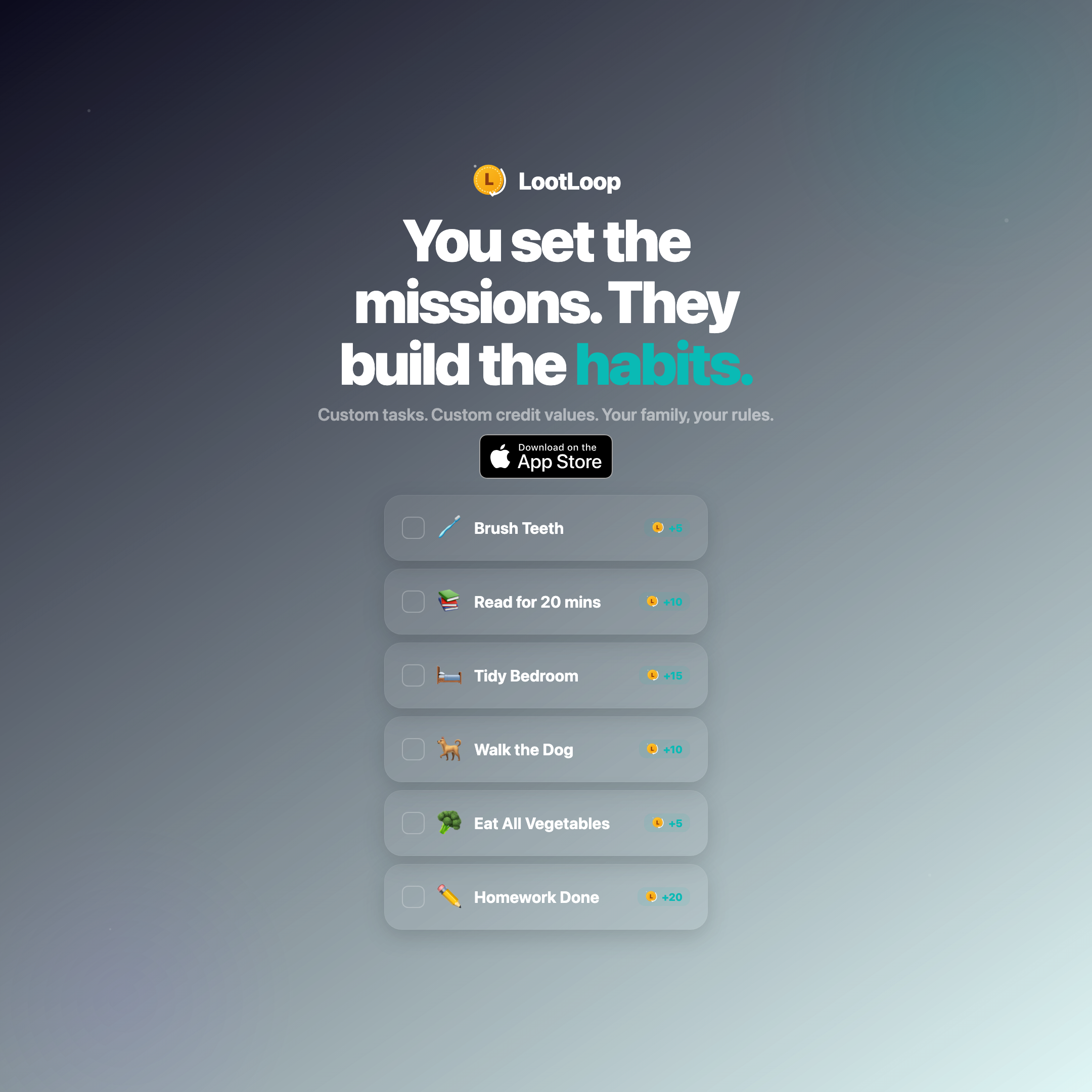
You set the missions. They build the habits.
LootLoop turns everyday chores into exciting missions kids actually want to complete.
- Custom missions & credit values
- Morning, school & bedtime routines
- Rewards they actually care about
Need More Support?
Childline
Free, confidential support for children
NSPCC Helpline
Support for parents and carers
Young Minds
Mental health support